
Probiotics, Prebiotics, Synbiotics & Postbiotics: Key Differences
A One-Sentence Guide to Understanding Them All
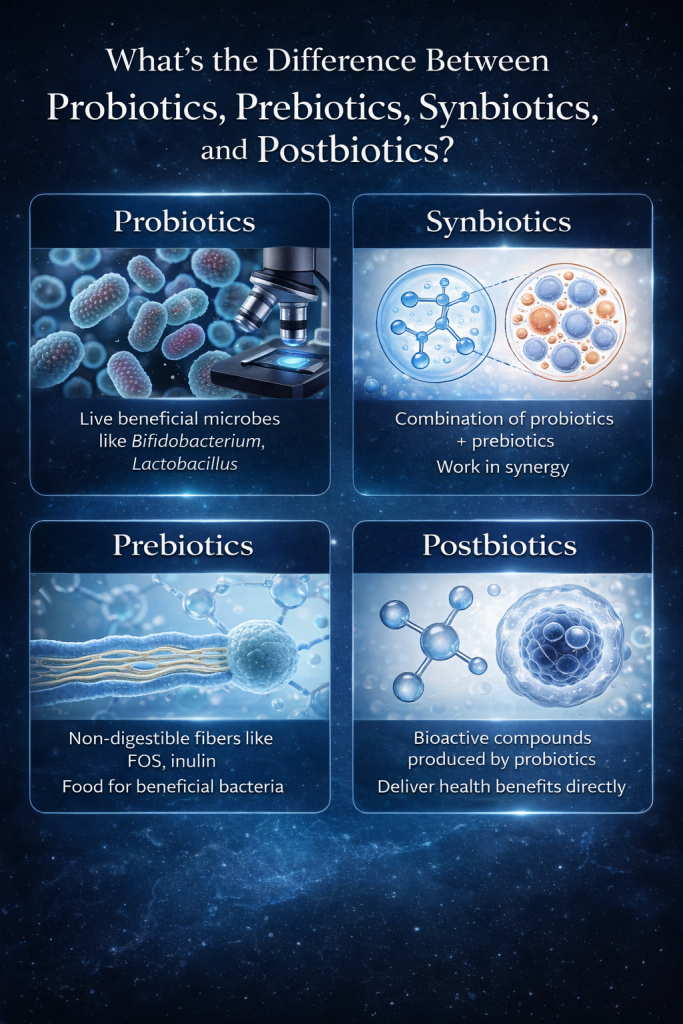
- Probiotics: Beneficial live microorganisms that actively work in the gut
- Prebiotics: The food that nourishes beneficial bacteria
- Synbiotics: A combined strategy of probiotics + prebiotics
- Postbiotics: The bioactive compounds produced after probiotics have done their job
Understanding these four concepts is essential for anyone involved in functional foods, dietary supplements, or gut health formulations. Let’s break them down—clearly and practically.
Probiotics: The Beneficial Bacteria That Do the Work
Probiotics are live microorganisms that, when administered in adequate amounts, confer health benefits to the host.
Once they enter the human body, probiotics mainly function by:
- Inhibiting the growth of harmful microorganisms
- Supporting digestion and metabolic processes
- Modulating immune responses indirectly
However, probiotics come with a natural limitation: they must stay alive to be effective.
For probiotics to work, they need to:
- Survive gastric acid and bile salts
- Reach the intestine alive
- Successfully adapt and (ideally) colonize the gut environment
Because these conditions vary greatly among individuals, many consumers report:
“I took probiotics, but I didn’t feel much difference.”
This variability is one of the biggest challenges in probiotic applications.
Learn more about our probiotic ingredient solutions here:
https://nihaobio.com/probiotics/
Prebiotics: Not Bacteria, but the Food for Them
Prebiotics are non-digestible ingredients that selectively stimulate the growth or activity of beneficial gut bacteria.
Common examples include:
- Fructo-oligosaccharides (FOS)
- Isomalto-oligosaccharides (IMO)
- Dietary fibers
Their role is simple but important:Help beneficial bacteria survive and thrive
However, prebiotics only work effectively if beneficial bacteria are already present in sufficient amounts.
If the gut microbiota is severely imbalanced, feeding alone may not deliver immediate benefits.
Synbiotics: Probiotics and Prebiotics—Together
Synbiotics combine probiotics + prebiotics in one formulation.
The logic is straightforward:
Provide beneficial bacteria and their preferred nutrients at the same time, increasing the chance they survive and function properly.
This approach can:
- Improve probiotic survival rates
- Enhance functional outcomes compared to probiotics alone
That said, synbiotics still rely on live bacteria:
Their effectiveness depends on survival, stability, and colonization success
So synbiotics do not guarantee consistent results—they increase probability, not certainty.
Postbiotics: Delivering the Benefits—Without Live Bacteria
Postbiotics represent a new and fast-growing category in gut health science.
They are defined as bioactive compounds produced by probiotics during fermentation, metabolism, or interaction with host cells, and they do not need to be alive.
Postbiotics may include:
- Short-chain fatty acids
- Organic acids
- Peptides
- Cell wall components
- Metabolites with proven physiological activity
Why Postbiotics Matter
Compared with probiotics, postbiotics offer several key advantages:
- No need for live bacteria — stability is significantly higher
- No colonization required — effects are more predictable
- Direct involvement in:
- Immune modulation
- Gut barrier repair
- Anti-inflammatory responses
In simple terms:
Postbiotics are the “finished work” of beneficial bacteria—ready to act.
This makes them especially attractive for:
- Functional foods
- Medical nutrition
- Infant & elderly nutrition
- Formulations requiring high stability and safety
Explore our postbiotic ingredient solutions here:
https://nihaobio.com/postbiotics/
Choosing the Right Strategy for Your Product
| Category | Needs Live Bacteria | Stability | Effect Predictability |
|---|---|---|---|
| Probiotics | Yes | Medium–Low | Variable |
| Prebiotics | No | High | Dependent on gut flora |
| Synbiotics | Yes | Medium | Improved but still variable |
| Postbiotics | No | High | High & consistent |
There is no “one-size-fits-all” solution. The best choice depends on:
- Target population
- Product format
- Regulatory environment
- Desired stability and shelf life
Your Partner in Probiotic & Postbiotic Ingredients
As a professional supplier of probiotic and postbiotic ingredients, we support global partners with:
- Scientifically validated strains and metabolites
- Stable, application-ready solutions
- Bulk supply and customized specifications
If you’re developing next-generation gut health products, we’d love to support your formulation.