
Featured Snippet
Magnesium glycinate is a highly bioavailable magnesium ingredient widely used in functional beverages, sports drinks, protein drinks, and fortified foods. Due to its excellent absorption and digestive tolerance, magnesium glycinate is becoming an important mineral ingredient in modern functional food formulations.
Introduction
As consumer demand for functional nutrition and wellness beverages continues to grow, food manufacturers are increasingly using highly bioavailable mineral ingredients. Among them, magnesium glycinate has emerged as one of the most promising magnesium sources for food and beverage applications.
Magnesium plays a critical role in energy metabolism, muscle function, and nervous system regulation, making it an important nutrient in modern diets. Compared with traditional magnesium salts such as magnesium oxide, magnesium glycinate offers better bioavailability and improved gastrointestinal tolerance, making it suitable for a wide range of food formulations.
Today, magnesium glycinate is increasingly used in functional beverages, sports nutrition drinks, protein beverages, meal replacements, and fortified foods.
Why Magnesium Glycinate Is Ideal for Food Applications
Magnesium glycinate, also known as magnesium bisglycinate, is a chelated form of magnesium where the mineral is bound to the amino acid glycine.
This chelation structure provides several advantages for food applications:
• Higher absorption compared with inorganic magnesium salts
• Gentle on the digestive system
• Neutral taste suitable for beverages
• Stable in many food formulations
Because of these properties, magnesium glycinate is widely used as a food-grade magnesium ingredient for functional nutrition products.
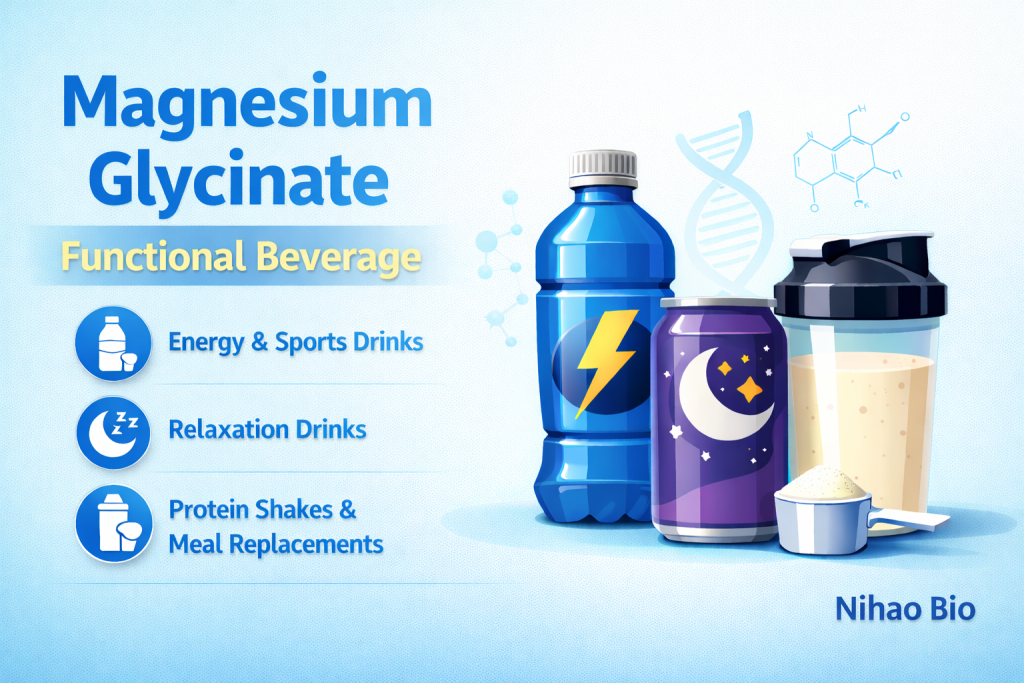
Major Applications of Magnesium Glycinate in the Food Industry
Magnesium Glycinate in Functional Beverages
Functional beverages are one of the fastest-growing segments of the global food industry.
Magnesium glycinate is commonly used in:
• relaxation drinks
• wellness beverages
• anti-stress drinks
• sleep support beverages
Magnesium helps regulate neurotransmitters involved in relaxation and sleep, making it an attractive ingredient for calming and nighttime beverages.
Typical dosage:
50–150 mg elemental magnesium per serving.
Magnesium Glycinate in Sports Drinks
Magnesium is essential for muscle contraction, electrolyte balance, and energy metabolism.
Therefore, magnesium glycinate is often used in:
• electrolyte beverages
• sports hydration drinks
• muscle recovery beverages
These products target athletes and active consumers who require mineral replenishment after exercise.https://tinyurl.com/4vrucevb
Typical dosage:
100–200 mg elemental magnesium per serving.
Magnesium Glycinate in Protein Beverages
Protein beverages and meal replacement drinks are another major application area.
Magnesium glycinate is commonly added to:
• whey protein drinks
• plant protein beverages
• meal replacement shakes
Magnesium supports energy production and metabolic functions, making it a valuable mineral in complete nutrition formulations.
Typical dosage:
80–150 mg elemental magnesium per serving.
Magnesium Glycinate in Functional Foods
Magnesium glycinate is also used in fortified food products, including:
• protein bars
• energy bars
• fortified cereals
• nutrition powders
These foods provide additional mineral support for consumers seeking balanced nutrition.
Emerging Trends Driving Magnesium Glycinate Demand
Several trends are accelerating the adoption of magnesium glycinate in the food industry.
1 Growth of Functional Beverages
Consumers increasingly seek beverages that provide health benefits such as:
• stress relief
• better sleep
• muscle recovery
• energy metabolism support
Magnesium-fortified beverages are becoming a key category within the functional drink market.
2 Demand for Highly Bioavailable Minerals
Food manufacturers are shifting toward chelated minerals with improved absorption.
Magnesium glycinate is considered one of the most bioavailable magnesium forms available for nutritional products.
3 Increasing Consumer Focus on Wellness
The global wellness trend is driving demand for ingredients that support:
• relaxation
• stress management
• sleep quality
Magnesium glycinate fits perfectly within this trend.
Future Outlook for Magnesium Glycinate in Food and Beverage Applications
The demand for mineral-fortified functional foods is expected to grow significantly in the coming years.
Magnesium glycinate will likely play an increasingly important role in:
• functional beverages
• sports nutrition products
• protein drinks
• wellness supplements
For food manufacturers seeking highly bioavailable mineral ingredients, magnesium glycinate represents an excellent solution for next-generation nutrition products.
FAQ
What is magnesium glycinate used for in food?
Magnesium glycinate is used as a mineral ingredient in functional beverages, sports drinks, protein beverages, and fortified foods to provide highly bioavailable magnesium for nutritional support.
Is magnesium glycinate suitable for beverages?
Yes. Magnesium glycinate is suitable for beverage formulations because it has good solubility, high bioavailability, and mild digestive tolerance compared with other magnesium salts.
How much magnesium glycinate is used in beverages?
Most beverage formulations contain 50–150 mg elemental magnesium per serving, depending on the product category and nutritional claims.