
As consumer demand for clean-label and plant-based foods continues to grow, manufacturers are actively replacing synthetic food colors with natural alternatives. Among natural blue colorants, Gardenia Blue has become an increasingly popular choice due to its vibrant blue hue, excellent water solubility, and suitability for a wide range of food applications.
However, one of the most common questions from food formulators and R&D teams is:
How stable is Gardenia Blue under heat, acidic conditions, and light exposure?
Color stability directly affects the appearance, shelf life, and consumer acceptance of finished products. Whether you’re developing gummies, beverages, dairy products, or confectionery, understanding the behavior of Gardenia Blue during processing and storage is essential.
This guide explains the stability of Gardenia Blue under different processing conditions and provides practical formulation tips for achieving the best color performance.
What Is Gardenia Blue?
Gardenia Blue is a natural blue food color produced from the fruit of Gardenia jasminoides Ellis. It is formed through the reaction of gardenia-derived compounds with amino acids during manufacturing, resulting in a stable blue pigment suitable for food applications.
Key advantages include:
Plant-derived ingredient
Clean-label friendly
Water soluble
Bright blue appearance
Suitable for vegetarian and vegan formulations
Compatible with many food systems
Because natural blue pigments are relatively rare, Gardenia Blue has become an attractive alternative to synthetic Brilliant Blue FCF in many markets where regulations and consumer preferences favor natural ingredients.
Heat Stability of Gardenia Blue
Heat is one of the biggest challenges for natural food colors. Fortunately, Gardenia Blue demonstrates relatively good heat stability compared with several other natural blue pigments.
Typical Processing Performance
Gardenia Blue generally performs well during:
Gummy manufacturing
Candy production
Fruit preparations
Yogurt processing
Pasteurization
Syrup production
It can usually tolerate heating temperatures of 80–95°C for short processing times with only minor color loss.
For applications involving temperatures above 100°C or prolonged heating, gradual fading may occur.
Heat Stability Summary
| Processing Condition | Stability |
| 70–80°C | Excellent |
| 80–95°C | Very Good |
| 95–100°C | Good |
| Above 100°C (long exposure) | Moderate |
Formulation Tips
To maximize heat stability:
Add Gardenia Blue near the end of heating whenever possible.
Minimize holding time at high temperatures.
Avoid repeated heating cycles.
Rapidly cool products after processing.
For gummy production, adding the color after cooking but before depositing often produces the most vibrant final appearance.
Acid Stability: How Does Gardenia Blue Perform?
Many popular food products—including gummies, beverages, yogurt, and fruit snacks—are formulated under acidic conditions.
The stability of Gardenia Blue is influenced by pH.
Recommended pH Range
Gardenia Blue performs best between:
pH 4.0–7.0
Within this range, the color remains bright and relatively stable.
Low pH Conditions
At lower pH values:
pH 3.8–4.0: Generally acceptable
pH 3.2–3.8: Slight fading may occur over time
Below pH 3.0: Color degradation becomes more significant during storage
Unlike anthocyanin-based colors, Gardenia Blue does not dramatically change to red in acidic environments, but prolonged exposure to strong acidity can gradually reduce color intensity.
Applications in Acidic Foods
Gardenia Blue can still perform successfully in:
Pectin gummies
Functional gummies
Fruit fillings
Yogurt
Fermented dairy
Some fruit beverages
Optimization of formulation and storage conditions is important for long-term stability.
Light Stability
Exposure to light is another major factor affecting natural food colors.
Like most plant-derived pigments, Gardenia Blue is sensitive to prolonged ultraviolet (UV) and strong visible light exposure.
Indoor Storage
Products stored:
Away from direct sunlight
In opaque packaging
Under normal warehouse conditions
typically maintain good color stability throughout their intended shelf life.
Direct Sunlight
Continuous exposure to sunlight can accelerate:
Color fading
Pigment degradation
Loss of blue intensity
Transparent packaging exposed to retail lighting may also increase fading over time.
Packaging Recommendations
For maximum color retention, manufacturers should consider:
Opaque containers
UV-resistant packaging
Aluminum foil pouches
Colored PET bottles
Cartons that reduce light exposure
Good packaging design is often as important as ingredient selection for maintaining color quality.
Stability in Different Food Applications
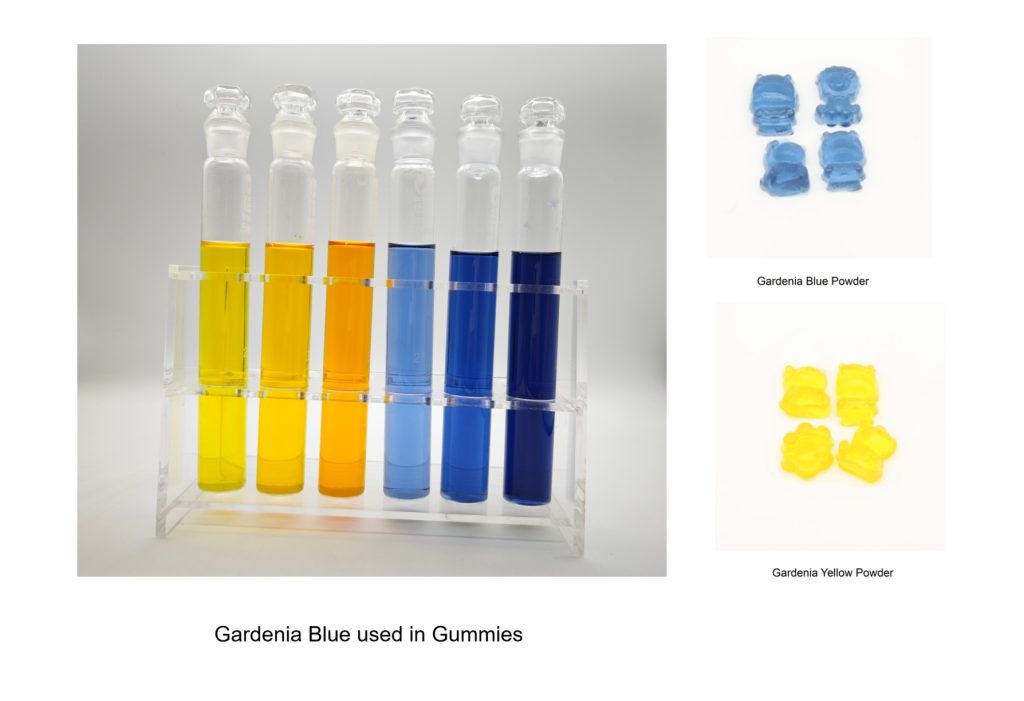
Gummies
Gardenia Blue performs particularly well in gummies because:
Heating time is relatively short.
pH is usually between 3.4–4.0.
Packaging limits light exposure.
It is widely used in:
Vitamin gummies
Children’s gummies
Functional gummies
Botanical supplements
Dairy Products
Yogurt and fermented dairy generally have moderate acidity.
Gardenia Blue remains stable when:
pH is controlled
Refrigerated storage is maintained
Light exposure is minimized
Confectionery
Hard candies require higher cooking temperatures, making formulation more challenging.
Manufacturers often improve color retention by:
Adjusting the addition point
Using concentrated color solutions
Optimizing cooking time
Beverages
Ready-to-drink beverages require careful evaluation because:
Low pH
Long shelf life
Continuous light exposure on retail shelves
These factors can gradually reduce color intensity.
Pilot-scale stability testing is strongly recommended before commercialization.
Factors That Affect Gardenia Blue Stability
Several formulation variables influence final performance:
pH
Lower pH generally accelerates degradation.
Temperature
Long heating periods increase color loss.
Oxygen
Oxidation may slowly reduce pigment intensity.
Using oxygen-barrier packaging can improve shelf life.
Light
UV radiation accelerates pigment breakdown.
Metal Ions
Trace amounts of iron or copper may influence color stability in certain formulations.
Chelating agents or careful ingredient selection may help reduce unwanted interactions.
Best Practices for Food Manufacturers
To achieve optimal stability, consider the following recommendations:
Maintain formulation pH above 3.5 whenever possible.
Add Gardenia Blue late in the production process.
Minimize prolonged heating.
Protect products from direct sunlight.
Use light-resistant packaging.
Conduct shelf-life testing under real storage conditions.
Verify compatibility with other ingredients before scaling up production.
Following these practices can significantly improve the visual quality of finished products.
Frequently Asked Questions
Is Gardenia Blue heat stable?
Yes. It performs well under typical food processing temperatures (approximately 80–95°C) and is suitable for many confectionery, gummy, and dairy applications.
Can Gardenia Blue be used in acidic gummies?
Yes. It is commonly used in gummies with pH around 3.4–4.0. Stability can be optimized through formulation and proper storage.
Does sunlight affect Gardenia Blue?
Yes. Prolonged exposure to sunlight or strong UV light can gradually fade the pigment. Protective packaging is recommended.
Can Gardenia Blue replace synthetic Brilliant Blue?
In many food applications, Gardenia Blue is an effective natural alternative. However, manufacturers should evaluate stability, processing conditions, and regulatory requirements in their target markets before substitution.
Conclusion
Gardenia Blue offers food manufacturers a clean-label, plant-based solution for creating attractive blue-colored foods and beverages. While no natural color is completely immune to environmental factors, Gardenia Blue demonstrates good heat stability, satisfactory performance in mildly acidic systems, and reliable color retention when protected from excessive light.
By understanding how heat, pH, packaging, and storage conditions influence its performance, formulators can successfully incorporate Gardenia Blue into gummies, dairy products, confectionery, and many other applications while maintaining vibrant color throughout the product’s shelf life.
As demand for naturally colored foods continues to rise, Gardenia Blue is well positioned to become one of the leading natural blue color solutions for innovative food manufacturers worldwide.
Ready to Develop Naturally Colored Products?
At Nihao Bio, we supply high-quality Gardenia Blue designed for applications including gummies, beverages, confectionery, dairy products, and functional foods. Our technical team can assist with formulation guidance, application testing, and customized color solutions to help you achieve excellent stability and vibrant natural color.
Contact us today to request samples or discuss your next product development project.