
Introduction: Why Rice Protein Is Becoming a Key Ingredient in Modern Food Formulation
The demand for plant-based nutrition continues to grow as consumers look for clean-label, allergen-friendly, and sustainable protein sources. Among various plant proteins, rice protein powder has gained increasing attention from food manufacturers due to its excellent nutritional profile, gluten-free nature, and compatibility with a wide range of food applications.
For food R&D teams, selecting the right protein ingredient is not only about protein content. Factors such as solubility, texture, mouthfeel, amino acid profile, processing stability, and compatibility with other ingredients are critical when developing successful products.
Rice protein is now widely used in:
Plant-based protein beverages
Protein shakes and powders
Nutrition bars
Bakery products
Dairy alternatives
Functional foods
Sports nutrition products
This article explores practical rice protein formulation examples and explains how each ingredient contributes to product performance.
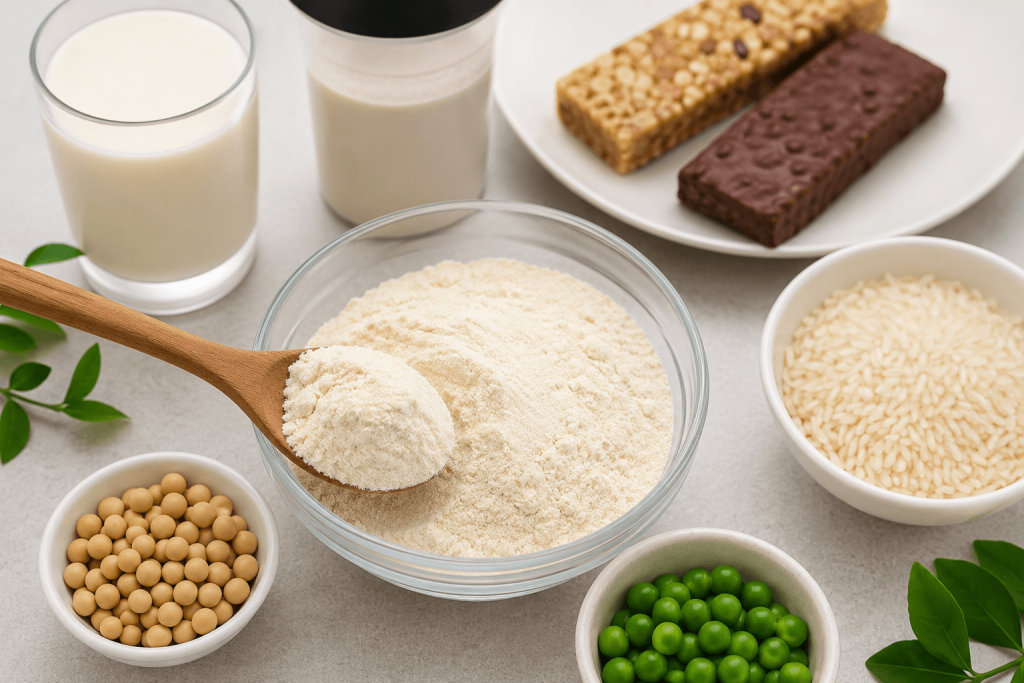
1. Rice Protein in Plant-Based Protein Beverages
Example Formulation: High-Protein Vegan Beverage
| Ingredient | Function | Typical Usage |
| Rice Protein 80% | Main protein source, nutrition enhancement | 4–6% |
| Pea Protein 80% | Improves amino acid balance and texture | 2–3% |
| Allulose / Erythritol | Sugar reduction and sweetness | 2–5% |
| Sunflower Oil | Improves creamy mouthfeel | 1–2% |
| Gellan Gum | Suspension stability | 0.02–0.05% |
| Natural Flavor | Masks plant protein notes | 0.1–0.3% |
Ingredient Function Analysis
Rice Protein Powder
Rice protein provides the primary nutritional value of the beverage. It is naturally:
Vegan-friendly
Lactose-free
Gluten-free
Easy to digest
Compared with some other plant proteins, rice protein has a mild flavor profile, making it suitable for beverages when combined with proper flavor systems and stabilizers.
However, because plant proteins naturally have limited solubility, formulation optimization is important. Combining rice protein with hydrocolloids and emulsifiers can significantly improve suspension stability and mouthfeel.
Pea Protein + Rice Protein Blend
Many commercial plant-based beverages use a pea protein and rice protein blend instead of a single protein source.
The reason is nutritional complementarity:
Rice protein is naturally rich in sulfur-containing amino acids.
Pea protein provides higher lysine content.
Together, they create a more balanced amino acid profile similar to complete protein sources.
From a formulation perspective, pea protein also contributes:
Better body
Higher viscosity
Improved protein structure
This combination is especially suitable for:
Ready-to-drink protein beverages
Vegan shakes
Meal replacement drinks
Allulose and Erythritol
Consumers increasingly prefer low-sugar products. Natural sweeteners such as allulose and erythritol help reduce sugar while maintaining taste.
Functions include:
Lower calorie formulation
Sugar-free positioning
Improved consumer acceptance
For protein beverages, allulose can provide a more sugar-like taste profile compared with high-intensity sweeteners alone.
Gellan Gum
Plant proteins tend to sediment during storage. Gellan gum is commonly used as a stabilizer because it can:
Maintain protein suspension
Improve texture
Reduce separation during shelf life
A small amount of hydrocolloid can significantly improve beverage quality.
2. Rice Protein in Protein Bars and Functional Snacks
Example Formulation: Vegan High-Protein Bar
| Ingredient | Function |
| Rice Protein | Protein enrichment |
| Pea Protein | Texture improvement and amino acid balance |
| Oat Fiber | Fiber enrichment and moisture control |
| Nut Butter | Flavor and healthy fat source |
| Chicory Root Fiber | Prebiotic fiber and texture |
| Natural Sweetener | Taste optimization |
Why Rice Protein Works Well in Protein Bars
Protein bars require ingredients that provide:
High nutritional value
Good binding properties
Pleasant chewing texture
Rice protein contributes:
1. Protein Content Enhancement
Adding rice protein can increase protein levels without using dairy ingredients.
This supports product claims such as:
Vegan protein bar
Plant-based nutrition
Dairy-free protein snack
2. Clean Label Advantage
Many consumers avoid:
Whey protein
Artificial additives
Dairy allergens
Rice protein provides manufacturers with a simple plant-based ingredient statement.
3. Compatibility with Fiber Ingredients
Rice protein performs well with:
Oat fiber
Inulin
Resistant dextrin
These combinations allow brands to create products positioned around:
High protein
High fiber
Digestive wellness
3. Rice Protein in Plant-Based Milk and Dairy Alternatives
Example Formulation: Rice Protein Milk Alternative
| Ingredient | Function |
| Rice Protein | Protein source |
| Oat Base | Improves creaminess |
| Plant Oil | Fat replacement and mouthfeel |
| Lecithin | Emulsification |
| Calcium | Nutritional fortification |
| Stabilizer System | Prevents separation |
Functional Challenges and Solutions
The biggest challenge in plant-based milk is achieving:
Smooth texture
Stable suspension
Dairy-like mouthfeel
Rice protein provides nutrition but may require support from:
Emulsifiers
Hydrocolloids
Plant oils
A well-designed formulation can achieve a beverage suitable for:
Coffee applications
Breakfast drinks
Consumer retail products
4. Rice Protein in Bakery Applications
Example: High-Protein Bread and Cookies
Rice protein can partially replace traditional flour ingredients to increase protein content.
Benefits:
Protein Enhancement
Traditional bakery products are mainly carbohydrate-based. Adding rice protein helps create:
High-protein bread
Functional cookies
Sports nutrition snacks
Gluten-Free Product Development
Rice protein is especially valuable for gluten-free formulations because it can be combined with:
Rice flour
Oat ingredients
Fiber ingredients
to create alternative bakery products.
5. Rice Protein in Sports Nutrition and Meal Replacement Products
Example Formulation: Vegan Meal Replacement Powder
| Ingredient | Function |
| Rice Protein | Primary protein source |
| Pea Protein | Complete amino acid profile |
| MCT Powder | Energy source |
| Inulin | Fiber and gut health support |
| Vitamin & Mineral Premix | Nutritional completeness |
| Monk Fruit Extract | Natural sweetness |
Why R&D Teams Choose Rice Protein
Modern consumers are looking for products that combine:
Protein
Energy
Digestive health
Clean ingredients
Rice protein fits well into these multifunctional nutrition products.
Key Formulation Considerations When Using Rice Protein
For successful product development, R&D teams should consider:
1. Protein Solubility
For beverages, choose rice protein grades with:
Better dispersibility
Optimized particle size
Improved processing performance
2. Flavor Management
Plant proteins may have natural cereal notes.
Solutions include:
Natural flavors
Cocoa powder
Vanilla
Fruit flavors
Sweetener optimization
3. Protein Combination Strategy
A rice protein + pea protein blend is often preferred because it improves:
Nutrition profile
Texture
Consumer acceptance
Conclusion: Rice Protein Offers Flexible Solutions for Next-Generation Food Products
Rice protein is no longer limited to protein powders. With proper formulation strategies, it can support the development of:
Vegan protein beverages
Functional snacks
Plant-based dairy alternatives
High-protein bakery products
Sports nutrition products
For food manufacturers, the key to successful rice protein application is not only choosing a high-quality protein ingredient but also designing a complete formulation system including sweeteners, fibers, stabilizers, flavors, and complementary proteins.
As demand for clean-label and plant-based nutrition continues to expand, rice protein provides food innovators with a versatile ingredient platform for developing healthier, sustainable, and consumer-friendly products.
Looking for rice protein solutions for your next formulation project?
Nihao Bio provides high-quality Rice Protein 80% with technical support for beverage, sports nutrition, bakery, and functional food applications.
Contact our formulation team to discuss your product development requirements.