
Protein innovation is rapidly evolving as consumers demand more protein-enriched foods, clean-label formulations, and sustainable nutrition solutions. Whey protein has long been considered the benchmark protein ingredient due to its high nutritional quality, excellent digestibility, and established applications in sports nutrition.
However, the growing demand for plant-based nutrition has accelerated interest in alternative proteins such as chickpea protein isolate. With its neutral positioning, allergen-friendly profile, and functional properties, chickpea protein is emerging as a promising ingredient for plant-based beverages, protein bars, bakery products, and functional foods.
For food manufacturers and R&D teams, the question is not simply “Which protein is better?” but rather:
“Which protein delivers the best performance for a specific application?”
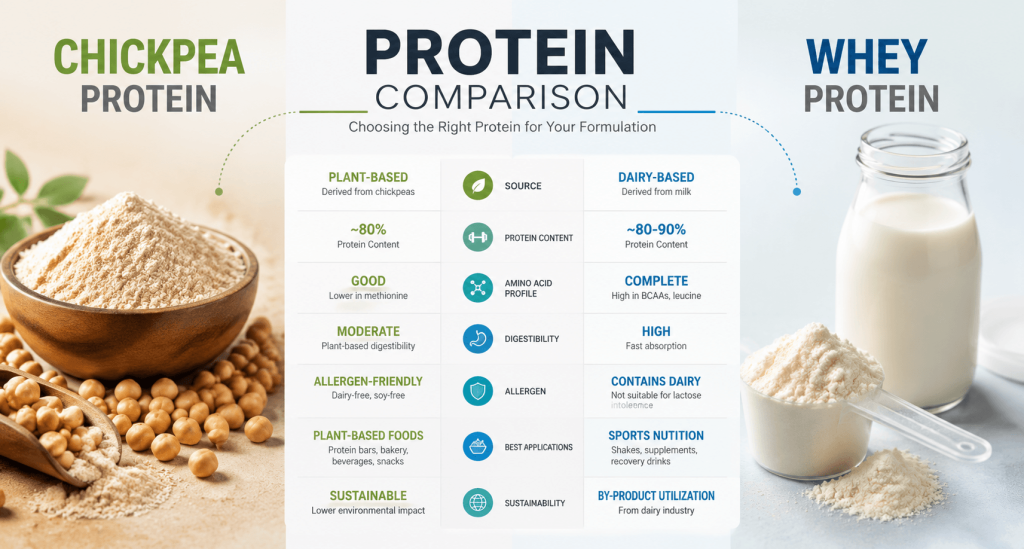
1. Protein Composition: Chickpea Protein vs Whey Protein
Whey Protein: The Traditional High-Performance Protein
Whey protein is derived from milk during cheese production. It is widely used in sports nutrition because of:
High protein content
Excellent amino acid profile
High levels of essential amino acids (EAAs)
Rich branched-chain amino acids (BCAAs), especially leucine
Research has shown that whey protein stimulates muscle protein synthesis effectively due to its rapid digestion and high leucine content.
A review published in Journal of the American College of Nutrition highlighted whey protein’s strong role in supporting muscle protein synthesis, especially in resistance training populations.
Chickpea Protein: A Growing Plant-Based Protein Source
Chickpea protein is extracted from chickpeas (Cicer arietinum), a legume known for its nutritional value.
Key advantages include:
Plant-based origin
Dairy-free
Naturally gluten-free
Good amino acid contribution
Consumer-friendly sustainability positioning
Chickpea protein contains significant amounts of essential amino acids, although like many plant proteins, sulfur-containing amino acids (methionine and cysteine) may be relatively lower compared with animal proteins.
Research has identified chickpea protein as a promising alternative protein ingredient with nutritional and functional potential.
2. Digestibility and Amino Acid Profile
Whey Protein
Whey protein is considered a complete protein because it contains all essential amino acids in favorable proportions.
Its advantages:
Rapid digestion
High bioavailability
Strong leucine response
This makes whey popular in:
Sports nutrition powders
Recovery drinks
Medical nutrition
Chickpea Protein
Chickpea protein provides a valuable plant-based amino acid profile.
Although the amino acid pattern differs from whey, chickpea protein can contribute significantly to daily protein intake.
For plant-based formulations, protein blending strategies are often used.
Examples:
Chickpea + Rice Protein
Benefits:
Improved amino acid balance
Dairy-free positioning
Better nutritional profile
3. Functional Properties in Food Applications
For food manufacturers, nutritional value is only one factor. Functional performance is equally important.
Solubility
Whey Protein
Advantages:
Excellent solubility
Suitable for clear protein drinks
Stable in many beverage systems
Challenges:
Sensitive to heat treatment
Dairy allergen considerations
Chickpea Protein
Chickpea protein functionality depends on:
Extraction method
Protein purity
Particle size
Processing conditions
Potential advantages:
Good water-binding capacity
Useful emulsification properties
Suitable for structured food applications
4. Application Comparison
(1) Protein Bars
Whey Protein
Advantages:
High protein density
Familiar consumer perception
Good nutritional positioning
Challenges:
Can create dry or chalky texture at high inclusion levels
Chickpea Protein
Advantages:
Plant-based positioning
Supports vegan protein bars
Works well with fibers and other plant ingredients
Potential applications:
Vegan protein bars
Functional snacks
High-protein cereals
(2) Plant-Based Beverages
Whey Protein
Suitable for:
Dairy-based protein drinks
Sports recovery beverages
Challenges:
Not suitable for dairy-free products
Chickpea Protein
Potential applications:
Plant-based milk alternatives
Functional beverages
Nutrition drinks
Challenges:
Flavor masking
Dispersion stability
(3) Bakery Applications
Chickpea protein has growing interest in bakery because it can contribute:
Protein enrichment
Water absorption
Texture improvement
Applications:
Protein bread
Cookies
Gluten-free bakery products
5. Sustainability Considerations
The sustainability discussion is becoming increasingly important for food manufacturers.
Whey protein benefits from utilizing a dairy industry by-product, while chickpea protein aligns with plant-based and lower-impact ingredient trends.
A study published in Nature Food highlighted the importance of diversifying protein sources to create more sustainable food systems.
6. Which Protein Should Food Companies Choose?
There is no universal winner.
The best choice depends on:
| Application | Preferred Protein Choice |
| Sports recovery drinks | Whey Protein |
| Dairy-based nutrition | Whey Protein |
| Vegan protein bars | Chickpea Protein |
| Plant-based beverages | Chickpea Protein |
| Clean-label products | Chickpea Protein |
| Maximum muscle-building positioning | Whey Protein |
| Sustainable plant-based products | Chickpea Protein |
Future Trend: Protein Systems Instead of Single Proteins
The future of protein innovation may not be about replacing whey completely.
Instead, food manufacturers are exploring:
Protein blends
Plant protein combinations
Improved extraction technologies
Better flavor systems
For example:
Chickpea Protein + Rice Protein
can provide:
Complementary amino acids
Improved nutritional balance
Better consumer acceptance
| Application Goal | Recommended Protein |
|---|
| Maximum protein content | Pea Protein |
| Better amino acid balance | Chickpea + Rice Protein |
| Mild taste beverage | Chickpea Protein |
| Plant-based meat texture | Pea Protein |
| Hypoallergenic formula | Rice Protein |
| Protein bars | Chickpea + Pea Protein |
Conclusion
Whey protein remains a highly effective protein ingredient with strong nutritional performance and decades of application experience.
However, chickpea protein represents an exciting opportunity for food manufacturers seeking plant-based, dairy-free, and sustainable protein solutions.
For R&D teams, the key question is not:
“Chickpea protein or whey protein?”
but:
“Which protein ingredient provides the best combination of nutrition, functionality, and consumer value for the final product?”
Nihaobio provides plant-based protein solutions including chickpea protein, pea protein, and rice protein for applications such as protein bars, beverages, and functional foods.
Contact our technical team for protein specifications, COA, application guidance, and customized formulation support.