
Introduction: From Sugar Reduction to Functional Carbohydrate Design
The food industry is undergoing a structural shift in sugar reduction solutions for food companies. For years, erythritol has been one of the most widely used low calorie sweetener alternatives in sugar-free and keto products.
However, formulation priorities are changing. Instead of focusing only on “zero-calorie sweetness,” manufacturers are increasingly looking for functional carbohydrate ingredients that deliver metabolic and sensory value.
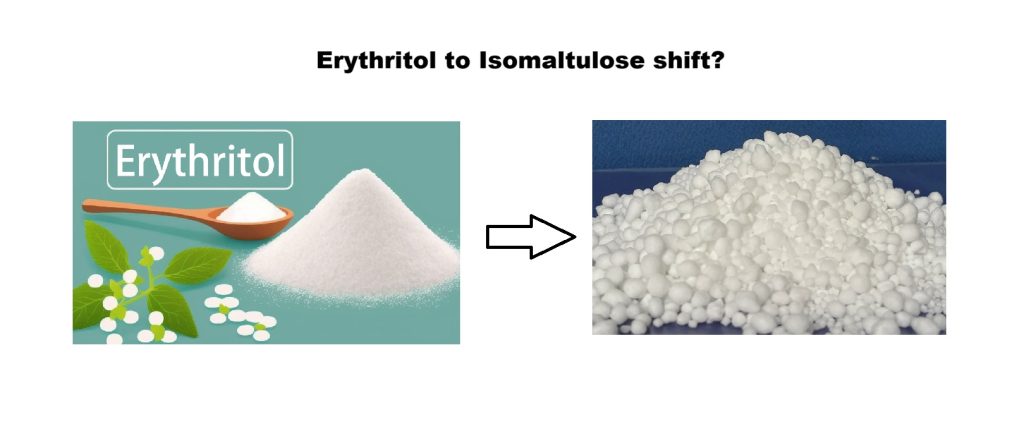
This is driving a growing trend: erythritol to isomaltulose replacement in selected food and beverage applications.
Unlike erythritol, which functions primarily as a non-caloric sweetener, isomaltulose is a low glycemic index carbohydrate sweetener that provides sustained energy release and functional nutrition benefits.
This shift reflects a broader industry transition from “sugar-free” positioning to clean label sweeteners for manufacturers focused on performance and functionality.
1. Sports Nutrition: The Strongest Driver of Isomaltulose Adoption
One of the fastest-growing segments for functional sweeteners in sports nutrition ingredients carbohydrate systems is endurance and performance nutrition.
Typical applications include:
- Energy drinks
- Isotonic beverages
- Energy gels
- Protein + carbohydrate RTD beverages
Limitations of erythritol in sports applications
While erythritol is widely used in zero-sugar formulations, it lacks functional value in performance nutrition:
- Provides no energy contribution
- Does not support endurance metabolism
- Creates sweetness without physiological function
Why isomaltulose is replacing erythritol
Isomaltulose is a low GI sports drink formulation ingredient that delivers:
- Slow and sustained glucose release
- Stable blood sugar response (~GI 30)
- Real carbohydrate energy contribution
As a result, brands are shifting from “zero sugar hydration” to endurance sports fuel ingredients with metabolic function.
2. Confectionery and Chocolate Reformulation Trends
Another key area of sugar replacement in food manufacturing is confectionery, including:
- Sugar-free chocolate
- Functional gummies
- Chewing gum and mints
- Better-for-you candy systems
Challenges with erythritol in confectionery systems
Erythritol is widely used in bulk sweetener replacement in confectionery, but it presents technical limitations:
- Cooling effect in chocolate applications
- Crystallization and texture instability
- Limited browning and flavor development
These issues often require additional masking agents or high-intensity sweeteners.
Advantages of isomaltulose
Isomaltulose supports a more natural sugar profile:
- More sucrose-like sweetness perception
- Improved process stability
- Better participation in Maillard reactions
- Supports low sugar confectionery formulation strategies
This enables manufacturers to move from “sugar-free indulgence” to low glycemic indulgence positioning.
3. Dairy Beverages and RTD Functional Drinks
A growing segment of natural sugar alternatives for beverages includes dairy-based and ready-to-drink systems:
- Protein milk beverages
- RTD coffee and lattes
- Functional nutrition drinks
- Meal replacement beverages
Erythritol limitations in dairy systems
In liquid protein systems, erythritol often results in:
- Thin mouthfeel
- Reduced flavor roundness
- Limited synergy with dairy proteins
This limits its use in premium RTD beverage sweetener systems.
Isomaltulose advantages
Isomaltulose offers:
- Better body and texture perception
- Stable integration in UHT systems
- Improved sweetness balance
- Compatibility with protein matrices
This supports a shift toward protein drink sugar replacement systems with functional carbohydrate structure.
4. Bakery, Protein Bars, and Functional Snacks
Bakery and bar applications represent another major area of bakery sugar replacement ingredients innovation:
- Protein bars
- Breakfast cereals
- Functional baked goods
- Meal replacement snacks
Technical limitations of erythritol
In thermal processing systems, erythritol:
- Does not support browning reactions
- May recrystallize after cooling
- Provides limited moisture retention
Functional advantages of isomaltulose
Isomaltulose enables:
- Improved Maillard browning and flavor development
- Better texture and chewiness in bars
- Enhanced moisture retention
- Stable carbohydrate structure in baked systems
This supports the development of functional bakery carbohydrates instead of purely low-calorie systems.
5. Market Economics: Why Manufacturers Are Willing to Switch
Although isomaltulose typically has a higher cost than erythritol, bulk isomaltulose suppliers are seeing increasing demand due to value-driven formulation economics.
Key drivers include:
- Reduction in flavor masking ingredients
- Improved sensory quality and consumer acceptance
- Stronger health claims (low GI, sustained energy)
- Premium positioning in functional nutrition markets
In many cases, manufacturers accept higher raw material costs in exchange for higher retail pricing and improved product differentiation.
6. Where Erythritol Still Dominates the Market
Despite this trend, erythritol remains dominant in several segments:
- Zero calorie beverages
- Keto and ultra-low-carb products
- High-intensity sweetener systems (stevia/monk fruit blends)
These categories still require strict zero calorie sweetener alternatives, where isomaltulose is not suitable due to caloric content.
Conclusion: From Sweetness Replacement to Functional Carbohydrate Systems
The shift from erythritol to isomaltulose reflects a deeper transformation in the food industry:
From:
- Sugar-free formulation logic
To: - Functional carbohydrate system design
The strongest adoption is occurring in categories where low glycemic index carbohydrate sweetener functionality is more important than zero-calorie claims.
For food manufacturers, this is no longer just about sugar reduction. It is about building clean label sweeteners for manufacturers that support energy, texture, and metabolic performance.
Ultimately, erythritol to isomaltulose replacement represents a strategic upgrade in formulation philosophy—from sweetness substitution to carbohydrate functionality engineering.