
How Do Probiotics Work? Science Behind Gut Health
As consumer awareness of preventive health continues to rise, probiotics have become a cornerstone ingredient in modern dietary supplements and functional foods.
But what truly happens after probiotics enter the human body? How do these microorganisms survive digestion and contribute to measurable health outcomes?
Rather than acting through a single pathway, probiotics support gut health through multiple coordinated biological mechanisms — from microbial competition to immune modulation and metabolic activity.
Here are five key ways probiotics function inside the gut.
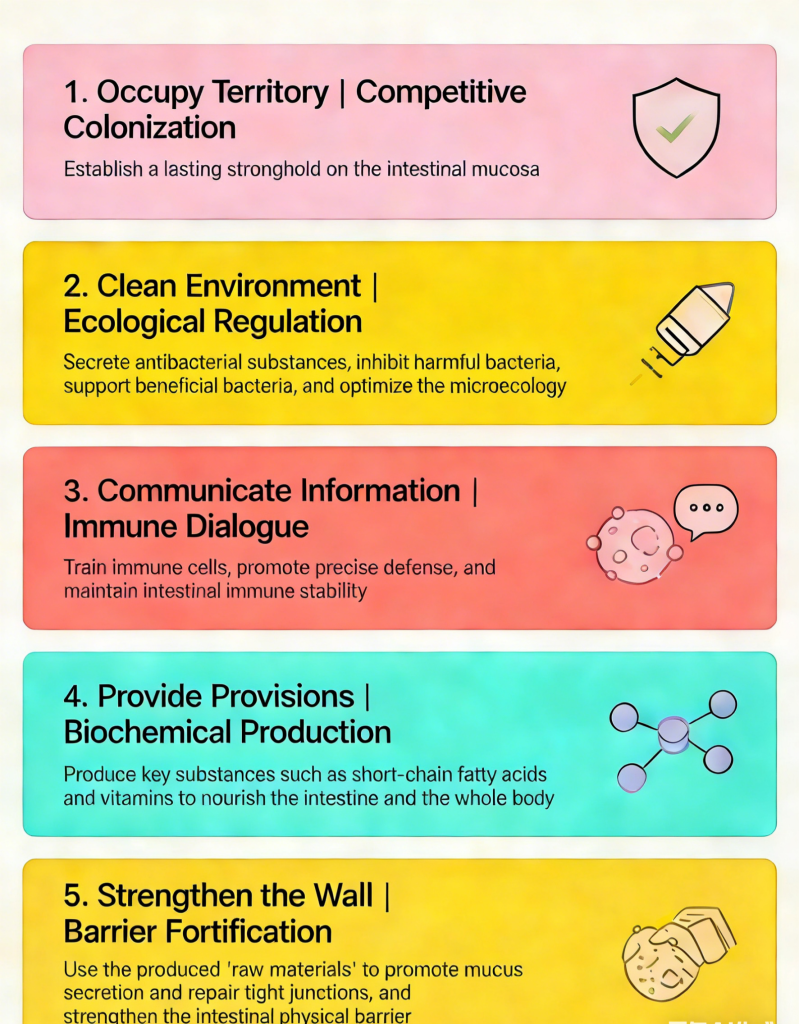
1. Competitive Colonization: Winning Space in the Gut
To be effective, probiotics must first survive harsh gastric conditions, including stomach acid and bile salts.
Once they reach the intestines, their priority is adhesion — attaching to the intestinal lining and competing with harmful bacteria for nutrients and binding sites.
Strains with strong colonization capabilities help prevent pathogen overgrowth and promote a more stable microbial ecosystem.
For brands, survivability is a critical indicator when selecting probiotic ingredients.
2. Microbial Regulation: Supporting a Balanced Ecosystem
Probiotics help maintain microbial balance through both direct inhibition and environmental support.
Many strains produce antimicrobial compounds such as bacteriocins and organic acids that suppress undesirable microorganisms.
At the same time, probiotics can modify intestinal pH and nutrient availability, creating conditions that favor beneficial bacteria.
A diverse and balanced microbiome is increasingly associated with long-term digestive and immune health.
3. Immune Communication: Training the Body’s Defense System
Approximately 70% of immune cells reside in the gut, making it a central hub for immune activity.
Probiotics interact with intestinal immune cells to help the body distinguish between harmful pathogens and harmless antigens.
Research suggests certain strains may:
- Promote immune tolerance
- Support anti-inflammatory signaling
- Enhance pathogen defense
- Contribute to immune homeostasis
This makes strain selection especially important for brands developing targeted health formulations.
4. Metabolic Activity: Producing Beneficial Compounds
Probiotics generate metabolites that play essential roles in human physiology.
Short-chain fatty acids (SCFAs) such as butyrate provide energy for colon cells and support intestinal barrier integrity.
Some strains also synthesize vitamins including folate, vitamin K, and certain B vitamins.
Additionally, probiotic metabolites can influence the gut–brain axis by contributing to neurotransmitter precursors linked to mood and cognitive function.
5. Barrier Reinforcement: Strengthening the Gut Wall
The intestinal barrier acts as a selective gatekeeper — allowing nutrient absorption while blocking toxins and pathogens.
Probiotics help reinforce this barrier by:
- Supporting tight junction proteins
- Encouraging mucus production
- Promoting epithelial repair
For example, butyrate-producing bacteria are widely recognized for their role in maintaining barrier strength and reducing low-grade inflammation.
Why Mechanisms Matter When Choosing Probiotic Ingredients
Understanding probiotic functionality is essential for brands aiming to develop effective and competitive products.
When evaluating suppliers, key factors should include:
-Strain specificity
-Clinical support
-Stability across shelf life
-Manufacturing standards
As global demand for gut health solutions accelerates, high-quality probiotic ingredients are becoming a strategic differentiator.
Looking for a Science Supported Probiotic Supplier?
At Nihaobio, we provide scientifically supported probiotic strains designed for stability, performance, and formulation flexibility.
– Broad strain portfolio
– Global supply capability
– Strict quality control
– Technical documentation support
Contact us today to discuss your sourcing needs.
probiotic product page : https://nihaobio.com/products/
References:
1.Hill, C., Guarner, F., Reid, G., Gibson, G. R., Merenstein, D. J., Pot, B., … & Sanders, M. E. (2014). Expert consensus document: The International Scientific Association for Probiotics and Prebiotics consensus statement on the scope and appropriate use of the term probiotic. Nature Reviews Gastroenterology & Hepatology, 11(8), 506-514.
2.Plaza-Díaz, J., Ruiz-Ojeda, F. J., Gil-Campos, M., & Gil, A. (2019). Mechanisms of action of probiotics. Advances in Nutrition, 10(suppl_1), S49-S66.
3.Yan, F., & Polk, D. B. (2011). Probiotics and immune health. Current Opinion in Gastroenterology, 27(6), 496-501.
4. Markowiak, P., & Śliżewska, K. (2017). Effects of probiotics, prebiotics, and synbiotics on human health. Nutrients, 9(9), 1021.