
The global protein market is changing rapidly. Consumers are no longer looking only for high protein—they also want clean label, vegan, dairy-free, allergen-friendly, and sustainable nutrition.
As a result, Pea and Rice Protein Blend has become one of the fastest-growing plant-based protein ingredients for sports nutrition, functional foods, beverages, meal replacements, and protein snacks.
But how does it compare with Whey Protein? Is it simply a substitute, or does it offer unique advantages?
Let’s explore why food and supplement brands worldwide are switching to Pea and Rice Protein Blend.
What Is Pea and Rice Protein Blend?
A Pea + Rice Protein Blend combines Pea Protein Powder and Rice Protein Powder in carefully balanced ratios, typically 70:30 or 80:20.
The purpose is simple:
Improve amino acid balance
Deliver a more complete protein profile
Enhance taste and texture
Expand formulation flexibility
Instead of relying on a single plant protein, manufacturers create a more nutritionally balanced ingredient that performs better across multiple applications.
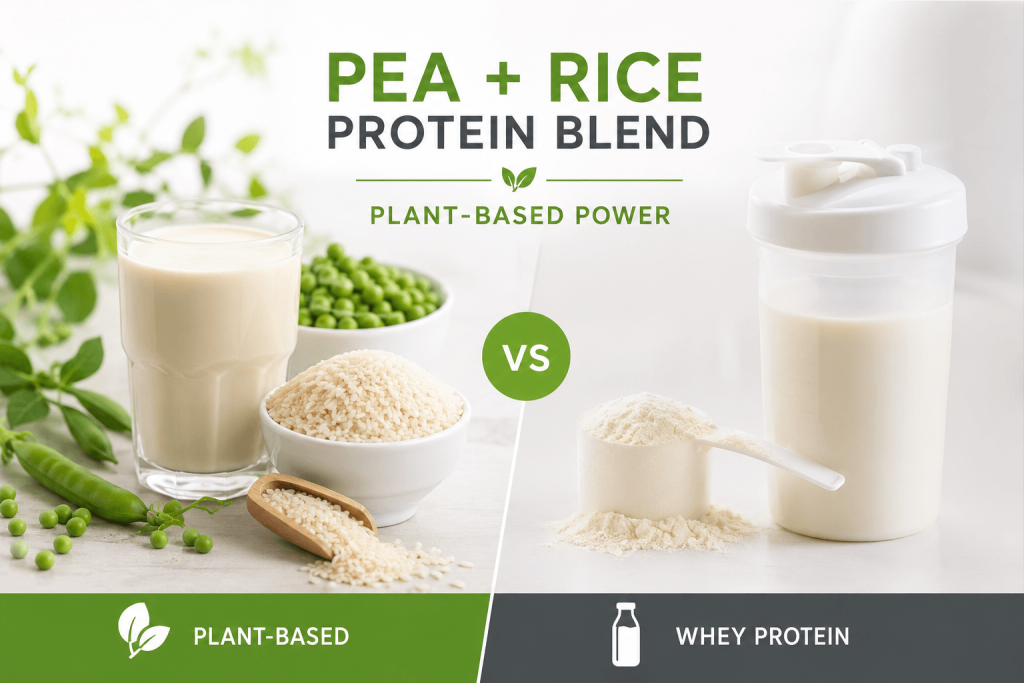
Why Combine Pea Protein and Rice Protein?
1. A More Complete Amino Acid Profile
One of the biggest challenges of single-source plant proteins is limiting amino acids.
| Protein Source | Limiting Amino Acid |
| Pea Protein Powder | Methionine |
| Rice Protein Powder | Lysine |
When combined, these proteins complement each other naturally.
Benefits include:
Better Essential Amino Acid (EAA) profile
Higher biological value
Improved protein quality
Better nutritional positioning
This complementary effect is why Pea and Rice Protein Blend is widely recognized as one of the best plant-based protein combinations.
2. Better Support for Sports Nutrition
Although Whey Protein still contains higher levels of leucine, Pea Protein Blend provides a strong BCAA profile while rice protein contributes sulfur-containing amino acids.
For many active consumers, athletes, and fitness enthusiasts, a Pea and Rice Protein Blend provides excellent support for:
Muscle recovery
Lean muscle development
Daily protein intake
Post-workout nutrition
Many vegan protein brands now formulate around this combination rather than using pea protein alone.
3. Dairy-Free and Easy to Digest
Unlike whey protein, Pea and Rice Protein Blend contains:
No lactose
No dairy proteins
No cholesterol
No animal ingredients
This makes it suitable for consumers who are:
Lactose intoleran
Following vegan diets
Looking for clean-label products
Sensitive to dairy
As digestive comfort becomes increasingly important, plant-based protein continues gaining market share.
4. Lower Allergen Risk
Compared with milk, soy, or egg proteins, Rice Protein Powder and Pea Protein Powder are considered lower-allergen ingredients.
They fit today’s most popular product claims:
Vegan Protein
Dairy-Free
Soy-Free
Gluten-Free
Non-GMO
Plant-Based
Clean Label
These claims are highly attractive across North America, Europe, Australia, and emerging Asian markets.
5. Improved Taste and Texture
Using only pea protein often results in:
Earthy flavor
Green notes
Slight bitterness
Using only rice protein may produce:
Chalky mouthfeel
Grainy texture
A Pea and Rice Protein Blend helps balance these characteristics, delivering:
Smoother texture
Better mouthfeel
Cleaner flavor
Easier flavor masking
This is one reason why many premium vegan protein powders combine both ingredients.
Pea and Rice Protein Blend vs Whey Protein
| Feature | Pea and Rice Protein Blend | Whey Protein |
| Protein Source | Plant-Based | Dairy |
| Complete Protein | Complementary amino acid profile | Naturally complete |
| BCAA | High | Very High |
| Lactose | None | May contain lactose |
| Vegan | yes | no |
| Dairy-Free | yes | no |
| Cholesterol | None | Present in small amounts |
| Allergen Risk | Lower | Milk allergen |
| Sustainability | Higher | Lower |
| Consumer Trend | Fast-growing | Mature market |
Rather than replacing whey protein completely, Pea + Rice Protein Blend gives brands an opportunity to reach entirely new consumer segments seeking plant-based nutrition.
Best Applications for Pea and Rice Protein Blend
The versatility of Plant-Based Protein makes it suitable for a wide range of food and nutrition products.
Sports Nutrition
Vegan Protein Powder
Performance Nutrition
Recovery Formulas
Ready-to-Drink (RTD) Beverages
High Protein Drinks
Functional Beverages
Meal Replacement Shakes
Plant-Based Dairy Alternatives
Oat Milk
Almond Milk
Plant Yogurt
Protein Bars
High Protein Snacks
Functional Nutrition Bars
Meal Replacement
Weight Management
Clinical Nutrition
Healthy Lifestyle Products
Bakery
High Protein Cookies
Pancakes
Muffins
Pet Nutrition
Functional Pet Treats
High Protein Pet Food
What B2B Buyers Should Consider
Choosing the right Pea and Rice Protein Blend Supplier involves more than protein content.
Key technical factors include:
Protein concentration (80%–85%)
Solubility
Flavor profile
Heat stability
Particle size
Suspension performance
Emulsification
Microbiological quality
Heavy metal compliance
Organic, Non-GMO, Kosher, Halal certification
Consistent batch-to-batch quality
A reliable supplier should also provide complete technical documentation, including COA, TDS, MSDS, specification sheets, and application support.
Why More Food Brands Are Switching to Plant-Based Protein
Consumer demand continues shifting toward healthier and more sustainable ingredients.
Compared with traditional animal proteins, Pea Protein Powder and Rice Protein Powder offer manufacturers the ability to develop products that meet multiple market trends at once:
Plant-Based Nutrition
Clean Label
Sustainable Ingredients
Vegan Lifestyle
Dairy-Free Formulations
High Protein Claims
This makes Pea + Rice Protein Blend one of the most attractive protein ingredients for future product innovation.
Looking for a Reliable Pea + Rice Protein Blend Supplier?
Whether you are developing protein powders, RTD beverages, nutrition bars, meal replacements, plant-based dairy alternatives, or functional foods, selecting the right protein ingredient is critical to your product’s success.
We supply premium-quality Pea Protein Powder, Rice Protein Powder, and customized Pea and Rice Protein Blends with:
High protein content
Excellent functionality
Stable quality
Competitive pricing
OEM & formulation support
Global export experience
Complete documentation (COA, TDS, MSDS)
Kosher, Halal, and Non-GMO options available
Contact us today to request samples, technical specifications, or a customized quotation for your next plant-based protein project.