
Rice Protein vs Pea Protein: Selection, Formulation & Process Optimization for All Food Segments
This complete rice protein vs pea protein formulation guide 2026 breaks down key differences between two mainstream plant proteins for food R&D teams. Every food R&D engineer faces the same question when developing plant-based lines: pick rice protein, pea protein, or blend them together?
Many teams only judge raw materials by crude protein content, ignoring critical gaps in digestibility, allergen risk, heat stability, taste and processing adaptability. These hidden differences will lead to repeated formula revision, unstable finished products and poor market feedback after mass production.
This article makes a side-by-side comparison between rice protein and pea protein, covering nutritional characteristics, functional performance, targeted formulation solutions and process adjustment skills across five core categories: high-protein beverages, bakery goods, plant-based dairy alternatives, extruded snacks, and sports nutrition supplements. It helps technical teams quickly lock the right protein or compound ratio to cut trial cost and shorten time-to-market.
Reference: PMC nutritional digestion research, EFSA allergen documents, Vitafoods 2026 on-site formulation sharing, global plant protein processing technical papers You can also check our detailed formulation breakdown shared on LinkedIn: https://www.linkedin.com/pulse/copy-rice-protein-food-formulations-practical-guide-rd-sherry-wang-3h1lc
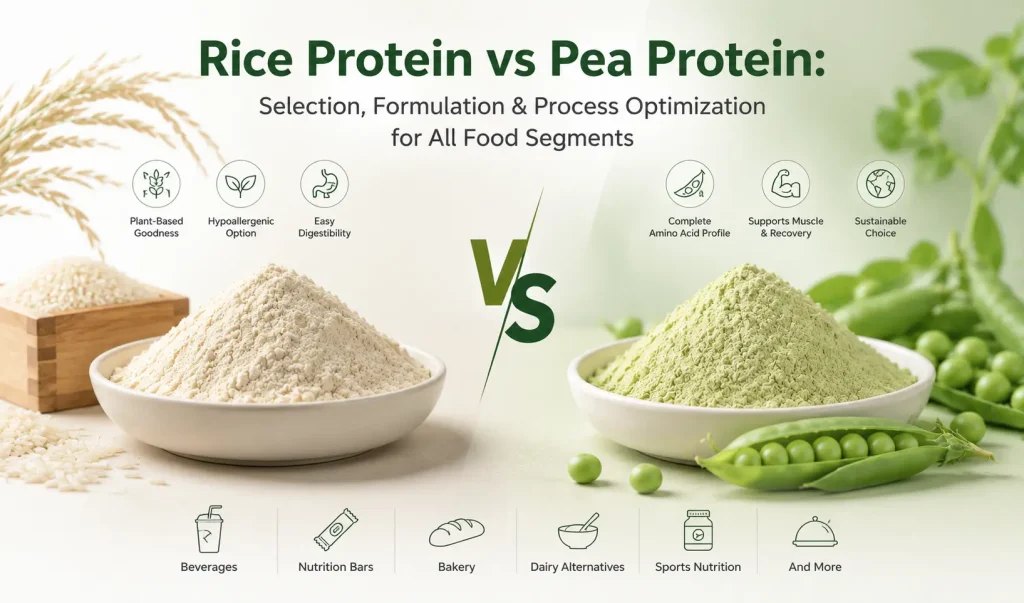
1. Core Nutritional & Safety Gap Between Rice Protein and Pea Protein
Before diving into formulation, we clarify the most decisive indicators for end product positioning: digestion efficiency, protein utilization and allergen risk. These three points determine which consumer groups your formula can cover.
1.1 Digestibility & Protein Utilization
Independent nutritional testing data shows rice protein hits 87%–88% digestibility. Although slightly lower than milk protein (95%), it outperforms fish protein (80.96%), soy protein (70.29%) and millet protein (35.20%) by a wide margin. Its protein utilization rate equals shrimp protein, better than wheat, corn, beans and peanut proteinPMC.
Pea protein has a high crude protein ratio, but its legume structure contains anti-nutritional factors. Many consumers report bloating, flatulence and mild gut discomfort after intake, and its actual in-vivo digestibility stays around 78%–82% without enzymatic hydrolysis. In single-protein formulas, its absorption efficiency cannot match rice protein.
When blended at 10% rice protein + 90% pea protein, the two complement amino acid profiles perfectly and reach a full amino acid score of 100, balancing high protein content and comfortable digestionRoquette.
1.2 Allergen Risk & Clean Label Compliance
Rice protein’s biggest long-underrated strength is ultra-low allergenicity. It is naturally gluten-free, contains no top 8 common food allergens, zero lactose, soy, peanut or dairy componentsPMC. It works perfectly for sensitive groups: lactose-intolerant people, children with fragile digestion, hypoallergenic functional food and export lines with strict allergen labeling rules.
Pea protein is classified as pulse allergen in EU, US and Australia regulatory systems. Any finished food adding pea protein must print clear allergen warning labels on packaging, which limits market access for sensitive-target products. Its earthy, bean-like off-flavor also requires extra masking agents to reach clean-label positioning.
1.3 Basic Sensory & Functional Traits Comparison Table
| Index | Rice Protein | Pea Protein |
|---|---|---|
| Flavor | Mild neutral cereal taste, no bitter/earthy aftertaste | Strong legume bean odor, lingering astringent bitterness |
| Color | Pale cream, neutral tone, no discoloration after heating | Dark beige, easy to turn gray during high-temperature baking |
| Solubility | Stable solubility under weak acid-neutral pH, less sediment | Poor solubility below pH 6, massive sedimentation in acidic drinks |
| Heat stability | Stable under short-time 135–140°C UHT, no aggregation | Easy protein denaturation & floating curds after long UHT holding |
| Emulsification | Medium emulsifying power, gentle suspension system | Strong emulsification & gelling capacity, great for cream texture |
| Extrusion adaptability | Soft texture, low expansion rate, clean taste snacks | High expansion, crisp structure, ideal for puffed protein chips |
2. Formulation & Processing Optimization by Application Scenario
2.1 High-Protein Beverages & Plant-Based Dairy Alternatives
Drinks put strict demands on solubility, suspension stability, UHT tolerance and taste. Sedimentation, gritty mouthfeel and strange off-notes are top three mass production failures.
Rice protein single formulation solution
Best fit for mild-tasting meal replacement shakes, coffee protein drinks, oat milk and hypoallergenic children’s plant milk.
- Recommended single serving protein dosage: 8–12g
- Process adjustment: Control pH 6.5–7.5, homogenize at 180–220 bar, add small-dose xanthan gum + pectin composite stabilizer
- Advantage: No heavy flavor masking syrup required, long shelf life without obvious layering, safe for sensitive consumer positioning
- Limitation: Single rice protein lacks lysine; amino acid balance needs pea protein supplementation
Pea protein single formulation solution
Suitable for thick creamy vegan yogurt, high-protein plant creamers and heavy mouthfeel ready-to-drink shakes.
- Recommended single serving protein dosage: 10–15g
- Process adjustment: Avoid pH below 6.2; pre-hydrate pea protein fully before mixing to reduce gritty particles; extend homogenization time
- Advantage: Powerful emulsification builds thick creamy texture, higher crude protein content per unit mass
- Limitation: Strong bean taste increases flavor development cost; allergen warning label mandatory for all finished goods
Industry mainstream compound formula (10% rice + 90% pea protein)
Balanced solution for most export beverage lines: full amino acid spectrum, reduced bloating risk, milder overall flavor, stable under standard UHT 135–140°C treatment, minimal sediment after 6-month shelf storage.
2.2 Bakery Products (Protein Bread, Muffins, Cookies, Breakfast Mixes)
Bakery formulation core targets: protein enrichment claims, proper loaf volume, moisture retention and allergen compliance. Neither rice nor pea protein can fully replace wheat flour; partial substitution is standard practice.
Rice protein bakery optimization
- Optimal replacement ratio: 8%–15% of total flour weight
- Core strengths: Gluten-free, no mandatory allergen labels, locks moisture to keep baked goods soft longer, neutral pale color without darkening after oven baking
- Process tip: Add extra 3%–5% water to raw materials to prevent compact, collapsed finished goods
Pea protein bakery optimization
- Optimal replacement ratio: 5%–12% of total flour weight
- Core strengths: Higher crude protein content, strong gel structure to retain gas inside dough
- Limitation: Excessive addition shrinks loaf volume; darkens after baking; mandatory allergen labels restrict cross-border sales
2.3 High-Protein Snacks & Extruded Puffed Food
High-protein snacks remain one of the fastest-growing food categories, with consumers prioritizing clean taste and pure ingredients alongside nutritional value. Harsh aftertastes and odd flavors from common plant proteins often complicate snack formulation.
Rice Protein for Snacks
Rice protein has no typical plant-based bitterness or astringency, pairing perfectly with low-allergy, children-oriented healthy snacks. It delivers soft texture with low expansion rate after extrusion.
Processing tip: Set extrusion temperature at 100–120°C, match with moderate maltodextrin to cut powdery residue on finished snacks.
Pea Protein for Snacks
Ideal for crispy protein chips and savory extruded snacks thanks to high expansion and strong oil-locking emulsification.
Limitation: Persistent bean flavor requires extra flavor modifiers, not suitable for hypoallergenic product lines.
2.4 Sports Nutrition & Functional Nutritional Products
Modern consumers of sports nutrition products prioritize clean ingredients, digestive comfort, and sustainable sourcing.
Rice protein’s 87%–88% digestibility and shrimp-level protein utilization make it ideal for protein powders, recovery beverages and meal replacement powders. Many manufacturers combine 10% rice protein with 90% pea protein to balance complete amino acid profiles and eliminate gut bloating caused by single pea protein intake.
3. Ingredient Selection Checklist for R&D Teams
Excellent formulation effect is based on high-quality raw materials. When selecting rice protein or pea protein suppliers, R&D teams should not only refer to protein content, but also focus on core practical indicators:
- Functional indicators: Solubility, particle size, bulk density, batch stability, UHT heat resistance
- Safety indicators: Microbiological safety, heavy metal control, full allergen-free verification
- Commercial & technical support: Stable supply, complete export certification documents, professional formulation technical support and free trial samples
4. Future Development Trend of Rice & Pea Protein Blends
With the continuous surge of consumer demand for easily absorbed, clean-label nutritional foods, rice protein is gaining wider market recognition. The industry is also advancing enzymatic modification technologies to further improve its solubility, dispersion, and suspension performance.
Moving forward, compound rice-pea protein formulas will become the mainstream choice for global food manufacturers, solving single protein’s drawbacks on taste, absorption and allergen compliance at the same time.
Final Conclusion
There is no absolute winner between rice protein and pea protein; your product positioning decides the better raw material:
- Pick rice protein or rice-pea blend for hypoallergenic, kid-friendly, export food without mandatory allergen labels, light beverages and soft bakery items;
- Pick pure pea protein for thick vegan yogurt, crispy puffed snacks and high-protein goods allowed to carry allergen warnings;
- Adopt the 10% rice + 90% pea compound formula for universal export drinks, meal powders and multi-purpose bakery premixes to balance flavor, absorption and global compliance.
If you need customized rice & pea protein formulation solutions, free R&D trial samples and full technical support for your product development, feel free to reach out anytime.
Website: www.nihaobio.com