
As consumer demand for plant-based, high-protein, and sustainable food products continues to grow, Pea Protein 80% has become one of the most widely used plant proteins in the global food industry. Thanks to its balanced amino acid profile, allergen-friendly nature, and versatile functionality, pea protein is now found in sports nutrition, plant-based beverages, meat alternatives, protein bars, instant drinks, and even noodles.
However, not all pea protein ingredients are the same. Different applications require different performance characteristics, and professional buyers often evaluate far more than just protein content.
In this article, we explore the key quality indicators of Pea Protein 80%, application-specific requirements, and what customers expect from reliable manufacturers.
What Is Pea Protein 80%?
Pea Protein 80% is a plant-based protein ingredient typically produced from yellow peas (Pisum sativum). It contains approximately 80% protein and offers excellent nutritional value while being naturally free from dairy, soy, and gluten.
Key Benefits
High protein content (≥80%)
Non-GMO options available
Vegan and vegetarian friendly
Low allergen potential
Good emulsification and water-binding properties
Suitable for clean-label formulations
Key Quality Indicators Buyers Care About
When purchasing pea protein, customers focus on several critical specifications that directly affect product performance.
1. Protein Content
Protein content is the most basic quality indicator.
Typical requirement:
Protein (N×6.25): ≥80%
Higher consistency between batches is often more important than achieving slightly higher protein levels.
2. Solubility
For beverage manufacturers, solubility is often the most important functional property.
Buyers evaluate:
Nitrogen Solubility Index (NSI)
Water dispersibility
Sedimentation rate
Suspension stability
Good solubility helps create smooth, stable protein drinks with minimal settling.
3. Flavor Profile
One of the biggest challenges of pea protein is its characteristic beany flavor.
Food manufacturers increasingly seek:
Low-beany flavor
Reduced bitterness
Reduced astringency
Clean taste profile
Flavor quality directly impacts consumer acceptance, especially in ready-to-drink beverages and protein shakes.
4. Color
Light-colored pea protein is preferred in many applications.
Typical expectations:
Light cream or pale yellow appearance
Minimal dark particles
Consistent color between batches
A lighter color improves appearance in beverages, dairy alternatives, and nutrition products.
5. Functional Properties
Depending on the application, buyers may evaluate:
Emulsification capacity
Water-holding capacity
Oil-binding capacity
Gel strength
Foaming properties
These characteristics influence texture, mouthfeel, and processing performance.
6. Microbiological and Heavy Metal Control
Food safety is a top priority.
Customers frequently request testing data for:
Total Plate Count, Yeast & Mold, E. coli, Salmonella
Lead (Pb), Cadmium (Cd), Arsenic (As), Mercury (Hg)
Compliance with international food safety standards is essential.
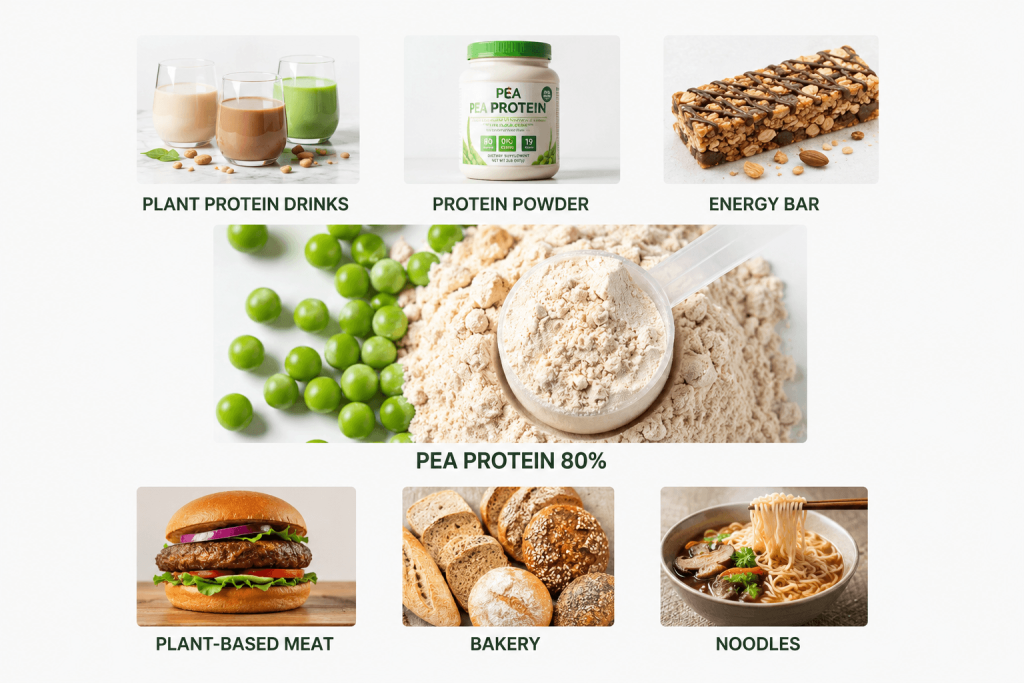
Application-Specific Requirements
Different industries prioritize different performance characteristics.
1. Sports Nutrition
Sports nutrition brands focus on nutritional quality and protein efficiency.
Key concerns:
Protein content
Amino acid profile
BCAA content
Digestibility
Heavy metal compliance
Instant solubility
Common products:
Protein powders
Meal replacements
Sports recovery formulas
For this market, clean-label and non-GMO certifications are often important purchasing factors.
2. Plant-Based Protein Beverages
Beverage manufacturers place the highest importance on functionality and sensory performance.
Key concerns:
Solubility
Suspension stability
Emulsification
Flavor profile
Heat stability
Low sedimentation
Common products:
Plant-based milk
Protein shakes
RTD beverages
Nutritional drinks
A highly soluble pea protein can significantly improve consumer experience.
3. Plant-Based Meat
Meat alternative producers focus on texture and processing performance.
Key concerns:
Gel formation
Water retention
Oil retention
Extrusion performance
Texture development
Common products:
Plant-based burgers
Sausages
Nuggets
Meat analogues
Strong functional performance often matters more than solubility in these applications.
4. Protein Bars and Bakery Products
Bakery manufacturers need ingredients that support both nutrition and texture.
Key concerns:
Water-binding capacity
Processing stability
Texture improvement
Flavor impact
Shelf-life stability
Common products:
Protein bars
High-protein cookies
Protein bread
Functional snacks
Low bitterness and a clean flavor profile help reduce formulation challenges.
5. Instant Beverage Powders
Manufacturers of powdered nutritional products prioritize dispersibility.
Key concerns:
Instant dissolution
Flowability
Bulk density
Flavor neutrality
Stability during storage
Common products:
Protein drink powders
Meal replacement powders
Nutritional supplements
6. Noodles and Instant Noodles
Pea protein is increasingly used to enhance nutritional value in staple foods.
Key concerns:
Dough processing performance
Water absorption
Texture retention
Cooking stability
Protein fortification efficiency
Common products:
High-protein noodles
Instant noodles
Functional pasta
Fortified grain products
Manufacturers seek ingredients that improve nutrition without negatively affecting texture.
What Buyers Expect from Pea Protein Manufacturers
Beyond product specifications, customers carefully evaluate suppliers.
Quality Certifications
International buyers often require:
HACCP, ISO 22000, FSSC 22000, GMP, Halal, Kosher
Additional certifications may include:
Non-GMO, Organic, Gluten-Free
Consistent Quality
Food manufacturers value consistency.
They expect:
Stable protein content
Consistent color
Consistent flavor
Stable functional performance
Batch-to-batch variation can create costly production challenges.
Reliable Supply Chain
Procurement teams evaluate:
Production capacity
Raw material sourcing
Inventory management
Lead time
Long-term supply stability
A reliable supplier helps minimize operational risks.
Technical Support
Professional buyers increasingly expect technical assistance.
This includes:
Application recommendations
Formulation support
Sample evaluation
Stability guidance
Regulatory documentation
Technical expertise can be a key differentiator.
Documents Buyers Commonly Request
Before approving a supplier, customers typically ask for
Certificate of Analysis (COA)
Technical Data Sheet (TDS)
Safety Data Sheet (SDS/MSDS)
Amino Acid Profile
Heavy Metal Test Report
Microbiological Test Report
Pesticide Residue Report
Non-GMO Statement
Allergen Statement
Halal Certificate
Kosher Certificate
Manufacturing Flow Chart
Providing complete documentation helps accelerate qualification and purchasing decisions.
Conclusion
As demand for plant-based protein continues to rise, Pea Protein 80% remains one of the most versatile and commercially successful protein ingredients available today.
Whether used in sports nutrition, plant-based beverages, meat alternatives, protein bars, instant drink powders, or high-protein noodles, buyers are increasingly focused on more than protein content alone. Solubility, flavor, functionality, food safety, regulatory compliance, and supply reliability all play critical roles in supplier selection.
For manufacturers, delivering consistent quality, strong technical support, and comprehensive documentation is essential to building long-term partnerships in the growing plant-based protein market.