
Low-calorie sweeteners are reshaping the global sugar reduction market, especially in beverages, gummies, dairy, and functional foods. Among the most widely used options today are Allulose, Erythritol, and Stevia—three sweeteners that deliver sweetness without the full caloric load of sucrose, but behave very differently in formulation, taste, and functionality.
This blog provides a practical, R&D-focused comparison to help food developers, brands, and formulators choose the right sweetener for specific applications.
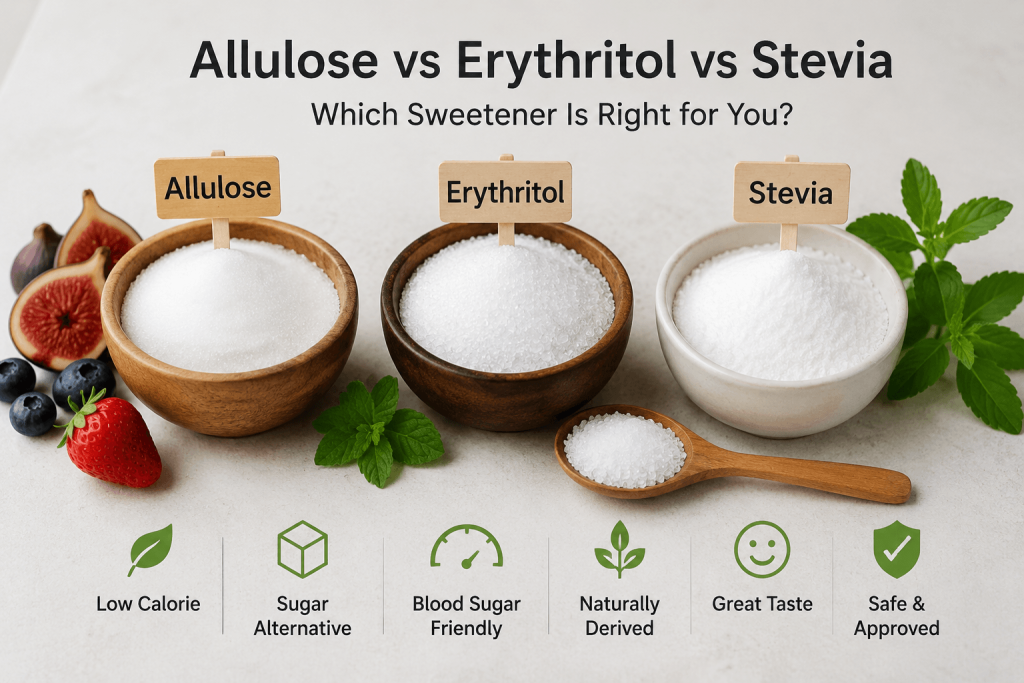
1. Overview of the Three Sweeteners
Allulose (Rare Sugar with Sugar-Like Performance)
Allulose is a naturally occurring “rare sugar” found in small amounts in fruits like figs and raisins. It provides about 70% of the sweetness of sucrose, but with only ~0.2–0.4 kcal/g.
What makes allulose unique is its sugar-like functionality:
Browning (Maillard reaction)
Caramelization
Bulking similar to sugar
Clean taste with minimal aftertaste
It behaves almost like sugar in processing, making it highly attractive for bakery, sauces, and premium beverages.
Erythritol (Sugar Alcohol with Cooling Effect)
Erythritol is a sugar alcohol (polyol) produced through fermentation of glucose. It provides about 60–70% sweetness of sugar and is nearly zero-calorie.
Key characteristics:
High digestive tolerance compared to other polyols
Strong cooling sensation in the mouth
Excellent stability under heat and acidic conditions
Commonly used in chocolate, chewing gum, and tabletop sweeteners
However, excessive use may lead to a cooling or “minty” mouthfeel that is not suitable for all applications.
Stevia (High-Intensity Natural Sweetener)
Stevia is a natural high-intensity sweetener extracted from Stevia rebaudiana leaves. Its sweetness is 200–350 times sweeter than sucrose, depending on glycoside composition (e.g., Reb A, Reb M).
Key features:
Zero calories
Extremely high sweetness potency
Heat-stable and pH-stable
Requires very low dosage
The main challenge is its taste profile, which may include bitterness or licorice-like aftertaste, especially at higher concentrations.
2. Sweetness & Taste Profile Comparison
| Feature | Allulose | Erythritol | Stevia |
| Sweetness vs sugar | ~70% | 60–70% | 200–350x |
| Aftertaste | Very clean | Slight cooling | Possible bitterness |
| Mouthfeel | Sugar-like | Cooling effect | Thin unless blended |
| Blending need | Low | Medium | High |
Key Insight:
Allulose offers the most sugar-like sensory profile
Erythritol adds bulk but introduces cooling
Stevia needs blending for taste masking
3. Caloric Content & Glycemic Impact
One of the biggest drivers for sugar reduction is metabolic health.
Allulose: Almost zero glycemic impact, does not raise blood glucose or insulin significantly
Erythritol: Zero glycemic response, excreted unchanged in urine
Stevia: Zero calories and zero glycemic impact
Summary:
All three are suitable for diabetic-friendly and low-GI formulations, but allulose stands out for being metabolized similarly to fructose but not absorbed in the same way.
4. Functional Performance in Food Applications
Bakery & Confectionery
Allulose: Excellent browning and caramelization → ideal for cookies, cakes, baked snacks
Erythritol: Poor browning, often causes crystallization in baked goods
Stevia: Cannot replace sugar bulk; must be combined with bulking agents
Beverages
Allulose: Clean sweetness, good body, minimal aftertaste
Erythritol: Slight cooling effect may not suit all drinks
Stevia: Very effective at low cost, but taste masking needed
Gummies & Candy
Allulose: Good texture but cost is higher
Erythritol: Common bulk sweetener, but can crystallize
Stevia: Used in combination systems only
Dairy & Yogurt
Allulose: Excellent sugar replacement with smooth mouthfeel
Erythritol: Works well but cooling may interfere with creamy profile
Stevia: Needs flavor balancing systems
5. Stability Under Heat and Processing
Allulose: Highly stable under heat; supports Maillard reaction and caramelization
Erythritol: Very stable, does not brown
Stevia: Heat-stable but sensitive to formulation environment (taste degradation in some systems)
For UHT beverages, baked goods, and processed foods, allulose offers the most “sugar-like” processing behavior.
6. Cost & Commercial Considerations
| Factor | Allulose | Erythritol | Stevia |
| Cost level | High | Low–medium | Medium–high |
| Usage level | High | High | Very low |
| Blending required | Low | Medium | High |
Allulose: Premium ingredient, still higher cost due to production complexity
Erythritol: Cost-effective bulk sweetener
Stevia: Cost-efficient at high sweetness intensity but often requires blend systems
7. Formulation Strategy: How They Are Used Together
In modern sugar reduction systems, these sweeteners are rarely used alone.
Common industry blends:
Stevia + Erythritol: Cost-effective sugar replacement system
Stevia + Allulose: Better taste + improved mouthfeel
Allulose + Erythritol: Sugar-like bulk system for gummies and bakery
Triple blend (Stevia + Erythritol + Allulose): Premium sugar reduction solution
This hybrid approach helps balance taste, cost, and functionality.
8. Regulatory Status Overview
Allulose: Approved in the US (FDA recognizes it as generally excluded from total sugars on labels)
Erythritol: Widely approved globally (US, EU, Asia)
Stevia: Approved in most regions (E960 in EU)
Regulatory acceptance is strong for all three, but labeling requirements differ significantly by region.
9. Which Sweetener Should You Choose?
Choose Allulose if:
You need sugar-like taste and texture
You are developing premium bakery, beverages, or dairy
Clean label and sensory quality are top priorities
Choose Erythritol if:
You need a cost-effective bulking sweetener
You are formulating sugar-free gum, tablets, or chocolate
Cooling effect is acceptable or desired
Choose Stevia if:
You need high sweetness with minimal dosage
You are targeting zero-sugar beverages or supplements
You can invest in flavor masking systems
Conclusion
The choice between Allulose, Erythritol, and Stevia is not about which is “best,” but which is best for the application.
Allulose delivers the most sugar-like experience
Erythritol provides functional bulk and stability at low cost
Stevia offers unmatched sweetness potency for zero-calorie systems
For modern food innovation, the strongest trend is blended sweetener systems, where formulators combine these ingredients to achieve optimal taste, cost efficiency, and functionality.
As consumer demand for reduced sugar continues to grow, understanding these differences is essential for developing competitive, clean-label products in the global market.